
Sin, Forgiveness, and Religious Authority
Pedro PáramoThis flow examines the conflict between religious teachings and the unequal, compromised practice of forgiveness in Comala.
increasing Bearing strength in each event
 decreasing
Bearing strength in each eventdecreasingA Poor Sister’s Plea
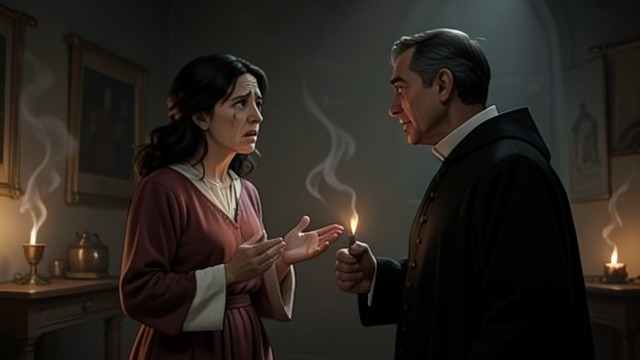
A Soul Judged in Poverty
María Dyada Appeals
María describes Eduviges as generous and asks Padre Rentería to help her sister reach salvation. Her plea insists that a lifetime of care should matter in the judgment of one desperate act.
A Rigid Answer
The priest emphasizes suicide as a violation of God’s will and refuses a path to special rites without money. The scene asks whether doctrine can offer mercy when applied without attention to suffering.
Miguel’s Unequal Pardon

Judgment for Sale
A Priest Refuses
Padre Rentería initially says Miguel should not be blessed because he was a wicked man. His refusal briefly appears to set a moral limit on Pedro’s influence.
Gold Changes the Outcome
Pedro’s donation leads the priest to perform the rite. The episode exposes a religious institution in which a wealthy sinner can command a service unavailable to the poor.
Rentería’s Confession
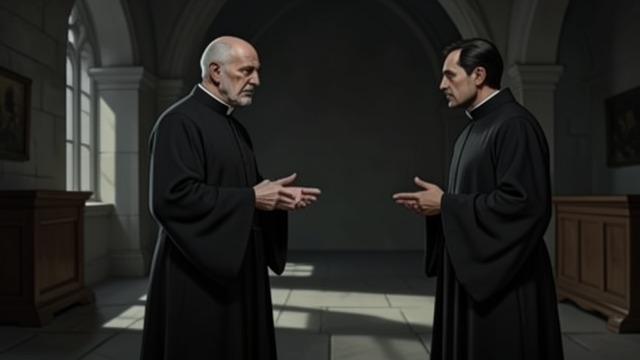
A Priest Seeks Absolution
The Confessor’s Rebuke
Padre Rentería tells another priest how he has yielded to Pedro and failed to protect his parish. The priest refuses to absolve him, arguing that good intentions cannot replace resistance to wrongdoing.
A Crisis Continued
Rentería returns to Comala without a clear way to repair his ministry. His spiritual doubts now include the knowledge that he has helped preserve the very power he condemns.
Susana’s Refusal
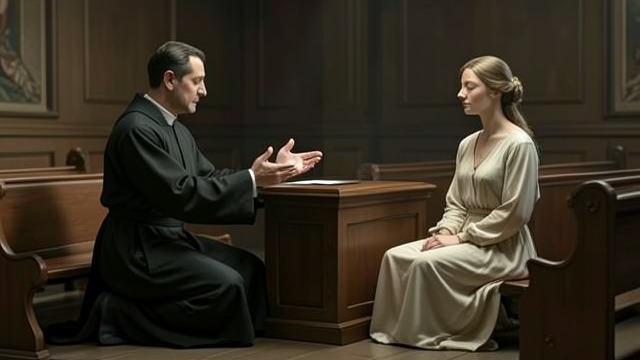
The Sacrament Cannot Reach Her
A Priest’s Instructions
Padre Rentería tries to prepare Susana for death with images of divine judgment and the afterlife. His religious language is intended to comfort and direct her.
A Mind Elsewhere
Susana asks to be left alone and returns to her own memories. The scene leaves open whether religious care can help a person whose emotional life no longer responds to the priest’s terms.
The Unfinished Question
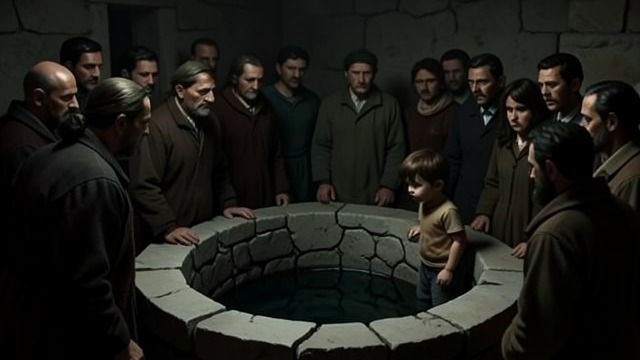
Salvation Without Certainty
Many Souls, Few Prayers
Residents describe Comala as full of souls with no one able to pray sufficiently for them. The afterlife is not a clear resolution but an extension of the town’s inequality and grief.
A Narrow Hope
Characters continue to seek pardon even when they suspect they will not receive it. The novel holds religious hope beside fear, corruption, and the possibility that no human authority knows the final answer.
After Eduviges takes her own life
At Miguel’s funeral
After Miguel’s funeral, in Contla
During Susana’s final illness
After the dead begin speaking from their graves
